Showing posts with label USA. Show all posts

Monday, August 3, 2009

The Space Race and Russia: a History of Undisclosed Failures


My favorite songwriter from the University of (Leftist) Leeds has graced us with an engaging and newsworthy article worthy of a Pulitzer. Englishman Timothy Bancroft-Hinchey writes on the recent fortieth anniversary (July 19th) of the American landing on the Moon and its miniscule impact in comparison to Russia’s longstanding and venerable record. He writes that Russia’s reputation has suffered an international smear campaign, referencing the ‘defeat’ of the USSR’s space program as nonsensical.

How can the Soviet program have been defeated when the United States currently relies on Russian space vehicles for entry into space? And who will continue to bring people and cargo to the ISS after 2010? Bancroft-Hinchey may not be a Russian, but he understands a historical Russian pretext: that Mother Russia endured Mongol invasions for two centuries so Western Europe could flourish and develop faster than their eastern brethren. The same concept continues to be applied today. How can NASA survive in space unless Russia assists it?

Russia has clearly bore the brunt of space endeavors. As if every Soviet accomplishment in space needs to be noted, Pravda’s star writer writes a litany of firsts. These include the launching of the first satellite (Sputnik, 1957), the first animal in space (Laika, 1957), the first man in space (Yuri Gagarin, 1961), the first woman in space (Valentina Tereshkova, 1963), and the first space station (Salyut, 1971). These were indeed firsts for humankind. However, Russia’s historical record is riddled with inaccuracies and little-known details that are best left unmentioned in Russia’s textbooks.

Sputnik might not have left ‘the American people so psychologically vulnerable’, as Eisenhower put it, if they knew the circumstances around its construction. Joel Barr and Alfred Sarant, American engineers, had supplied the Soviets with military secrets for years before they defected to the Soviet Union in 1950. The information they provided helped construct the first artificial satellite and build a new arena for the Soviets to prove that they plainly did not have an inferiority complex. Additionally, Laika the dog, the first animal in space, did not survive in space for nearly two weeks, but was dead on arrival.

The permanent member of Pravda’s editorial staff tactlessly suggests that the United States engineered the Moon landing. While Bancroft-Hinchey’s claim is laughable, it is nevertheless hackneyed, having been postulated many times before. American conspiracy theorists, probably at the insistence of a Soviet active measures campaign, continue to doubt the lunar landing. Never mind the fact that there were five consecutive landings after this one. However, this conspiracy ranks alongside some of the more unusual (proven) Soviet insults, including the U.S. military invented the AIDS virus to infect Third World countries and American parents adopt foreign children to harvest their ‘baby parts.’ Bancroft-Hinchey serves two purposes in life: to promulgate Russian propaganda and continue to excuse past grievances against the noble Soviet Union. If Pravda and The X-Files had an illegitimate child, he would be that unfortunate offspring striving to work farther from the truth.

Space exploration in the 21st century is a microcosm for its quarry: vast and empty. With President Obama’s ambiguous stance on space, the future of NASA is unknown. The Constellation program and its new launch vehicle and spacecraft (Orion) might not go into effect for years now and space funding may be significantly slashed. The American people will have to wait until a solidified plan is implemented, if at all. Meanwhile, Russia maintains that she has no intentions of a lunar mission with Mars shining brighter. Indeed, we can all assume that in the post-Soviet age, Mars just might be that better shade of propaganda-red for Russia to pursue.

Friday, February 13, 2009

Why Nurture Russia's Illusions?


One of the best articles I've read on the current analysis of US-Russian relations and Russia's status quo: their intentions, objectives, and prospects. Perfect for anyone with a rudimentary knowledge of Eurasian affairs.

By MATTHEW KAMINSKI - WSJ

Barack Obama wants to make friends with Russia, "press the reset button" as his Veep proposed the other day.

Sounds familiar. Bill Clinton bear hugged Boris Yeltsin and George W. Bush peered into successor Vladimir Putin's soul. Yet relations haven't been this bad since Konstantin Chernenko's days at the Kremlin.

So what? America is on a roll in Eurasia. Democracy, open markets and stability spread across the region in the Clinton and Bush eras. From Estonia to Georgia to Macedonia, free people want to join the West.

At every step of the way, Russia sought to undermine this great post-Cold War project. Grant that the Kremlin acts in defense of its perceived interests but so should the U.S., and continue down this same path.

Here Foggy Bottom's finest chime in: Yes, but imagine a world with a friendly Russia, able to help us, say, stop Iran's atomic bomb program. So let's not push so hard to deploy anti-Iran missile defense sites in Poland and the Czech Republic that Russia hates -- use, if necessary, the excuse that costs and feasibility require further study. Back off on closer NATO ties for Ukraine and Georgia. Make Russia feel important and consulted. Joe Biden sketched out this sort of bargain at last weekend's Munich security conference.

The conceit is we can win the Kremlin over by modifying our behavior. Before Mr. Obama tries, he should be aware of recent history. On missile defense, American diplomats spent as much time negotiating with Russia as with the Central Europeans, offering Moscow the chance to join in. Nothing came of it. On Kosovo independence and Iran sanctions, Russia blocked the West at the U.N.

Last spring, NATO snubbed Georgia and Ukraine in a signal of good will to Mr. Putin. The day after, Mr. Putin privately told Mr. Bush that Ukraine wasn't "a real country" and belonged in the Russian fold. Five months later, Russia invaded Georgia and de facto annexed its breakaway provinces of Abkhazia and South Ossetia.

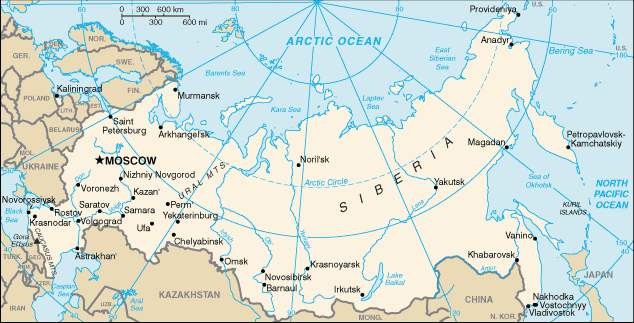
Mr. Obama may be tempted to think Russia can be won over. After all, they would seem to need America (short for the West) far more than America needs Russia. We're not the enemy. Russia's real strategic challenges are in the East: China looks ravenously at the vast, mineral-rich, lightly populated Siberian steppe cut off from Moscow (to this day, you can't drive across Russia). And to the South: The arc of Islamic extremism, starting with a possibly nuclear Iran, a competitor for Caspian energy and influence.

And as Mr. Putin discovers each day his economy sinks further, Russia failed to take advantage of sky-high oil prices to diversify away from energy. It sells nothing of value to the world aside from gas, oil and second-rate weapons. Its infrastructure is decaying and its population in decline.

A Kremlin leader with a long-term view would see these grave threats to Russia's future and rush to build a close partnership with the West. But the interests of Mr. Putin and his small, thuggish, authoritarian clique don't necessarily coincide with that of Russia.

The Obama magic dust doesn't seem to work on a regime defined and legitimized by its deep dislike for America. Dmitry Medvedev, the Putin underling in the president's office, moved the state of the nation address to the day after the American election to spin the outcome for the domestic audience. The U.S., he said into the winds of pro-American sentiment sweeping across the world in the wake of the Obama win, was "selfish . . . mistaken, egotistical and sometime simply dangerous."

The Kremlin then welcomed Mr. Obama into the White House with the administration's first serious foreign policy headache. Taking $2 billion from its fast-depleting reserves, Russia bullied and bribed Kyrgyzstan to close a U.S. military airfield, the main transport hub for supplies going into Afghanistan. Russia's desire for a "sphere of influence" trumps the threat of resurgent extreme Islamism in its southern underbelly.

The thinking here is Cold War porridge. But the Russians were never offered a new narrative. Mikhail Gorbachev's idea of a "European family" and Yeltsin's reforms foundered. Mr. Putin went back to a familiar recipe: Russia, empire-builder and scourge of the West.

A Cold War mentality lingers in America, too. A foreign policy caste rich in Sovietologists by habit overstates Russia's importance. The embassy in Moscow is huge; bilateral meetings inevitably become "summits," like in the old days.

Mr. Obama's fresh start is a good time for a reality check. The U.S. can work with Russia, seen in its proper place. To even suggest that the Russians have a special say over the fate of a Ukraine or our alliance with the Czechs lets Mr. Putin nurture the illusion of supposed greatness, and helps him hang on to power.

Ultimately it's up to the Russians to decide to be friends. One day, someone in the Kremlin will have to confront a hard choice: Does an isolated and dysfunctional Russia want to modernize and join up with the West, look toward China, or continue its slow decline? Until then, Mr. Obama better stock up on aspirin and dampen his and our expectations about Russia.

Friday, January 30, 2009

Espionage Scandal: US Father and Son Charged With Spying for Russia


The following is an abridged version of an original article from KVAL news station in Eugene, Oregon. Matthew Olsen, acting assistant attorney general for national security, summarizes it best when he said that "These charges underscore the continuing threat posed by foreign intelligence services and should send a clear message to others who would consider selling out their country for money."

EUGENE, Ore. -- A 24-year-old Eugene man faces federal charges he traveled the globe to get money from Russian spies and disperse the money to family members at the direction of his father, a former CIA spy and Chief of Station in Bucharest, Romania, imprisoned in Oregon since 1997 for espionage.

Nathaniel James Nicholson, 24, of Eugene, Ore., and his father, Harold James Nicholson, 58, who is incarcerated at a federal prison in Sheridan, Ore., face arraignment Thursday on two counts of conspiracy, one count of acting as agents of a foreign government and four counts of money laundering, according to the U.S. Department of Justice.

The federal charges announced Thursday allege the son met with the father in prison on several occasion to obtain information with the intent to then meet with representatives of the Russian Federation.

The indictment alleges the son then brought the money, paid by the Russian Federation for the father's past espionage activities, back to Oregon to disperse to family members at his father's direction.

The two were scheduled to be arraigned Thursday in Portland at 1:30 p.m.

The indictment says Harold Nicholson, who pleaded guilty in 1997 after being paid $300,000 to pass secrets to the Russians, wanted to receive additional payments for his work, and used his son as a go-between.

Officials charged that Nathaniel Nicholson collected another $35,593 in a series of recent trips to meet Russians in San Francisco, Mexico City, Lima, and even a T.G.I. Friday's restaurant in Cyprus in December.

On each return trip to the United States, the messenger son would declare less than $10,000 in cash to avoid federal law requiring him to disclose the source of the money, authorities said.

Harold Nicholson is currently serving a 23-year prison term in Sheridan after pleading guilty to conspiring to commit espionage. As a trainer of CIA personnel, authorities say he gave the Russians the identities of the young CIA recruits he was training, and the identities of other high-level CIA officers.

According to the new indictment, the Russians still thought Harold Nicholson might be able to give them valuable information — specifically, how he had been discovered and how much the investigators had learned about Russian spying.

The father told his son he was due a "pension" for his past work for the Russians, and even dropped hints that he would like to live in Russia when he was freed. To that end, investigators say, he once relayed his age, height, weight, and other relevant personal data that would be required for a Russian visa.

Thursday, January 29, 2009

Russian Military Suicides Still Remain High


Russia Today (RT) was very quick to make an article entitled "US army suicide highest in 3 decades" the first viewed after its main story. From an unnamed source at the Department of Defense, RT reported that at least 128 soldiers killed themselves in 2008 alone (13 more than in 2007). The English language news-service from Russia ended the piece by suggesting that:

"American troops are under unprecedented stress because of repeated and lengthy tours of duty due to simultaneous wars in Iraq and Afghanistan."

This is in stark contrast to figures coming out of Russia's armed forces, where a total of 341 military personnel committed suicide in 2007, the equivalent of an entire battalion of Russian soldiers. Fortunately, that high figure is a reduction from 15% the previous year. Analysts credit the number with the process of dedovshchina - literally, rule of the elders, in which young soldiers are often violently bullied into killing themselves.

With morale low, corruption among senior staff high, and violent prostitution all common themes, the hopelessness of military life in Russia is reason enough for many families to pay bribes to keep their children away from conscription. RT should not pretend that the US Army has an extensive problem when they themselves have been struggling for over a decade to improve their excuse for a modern military.

Friday, January 9, 2009

Historic US-Georgian Partnership Charter Signed


Earlier today at the US Department of State, US Secretary of State Condoleezza Rice and Georgian Foreign Minister Grigol Vashadze signed the first Charter on Strategic Partnership between their two countries.

The document affirms the importance of the relationship between the US and Georgia, emphasizing that this cooperation between the two democracies is based on shared values and common interests, and stresses the mutual desire to strengthen the relationship across the economic, energy, diplomatic, scientific, cultural and security fields.

A Georgian official called the charter an important "stepping stone" for the Caucasus nation into NATO and the "family of Western and civilized nations."

The non-binding document is yet another reminder of the strong commitment between the two countries. This past September, US President Bush pledged $1 billion in aid to Georgia in light of Russia's violation of Georgia's territorial sovereignty.

The full text of the charter may be found at Civil Georgia.

The full video of the signing of the charter can be found below courtesy of The Department of State.

Tuesday, December 16, 2008

Central Asia: Russian General Claims US Wants to Build Two Military Bases in Region


I noticed that General Makarov had been making the news a lot lately, so here is an additional article from EurasiaNet about his thoughts on US involvement in Central Asia (naturally, Russia's sphere of influence).

The United States is planning to set up military bases in Uzbekistan and Kazakhstan, Russia’s top general is claiming.

Russia’s armed forces chief of staff, Gen. Nikolai Makarov, revealed the news during an event at the Academy of Military Science in Moscow on December 16, saying that he had information that Washington was actively pursuing new facilities in Central Asia. "American military bases are dotted throughout the world. The US has opened bases in Romania and Bulgaria, and according to our information, [it] plans to establish [new bases] in Kazakhstan and Uzbekistan," the official RIA Novosti news agency quoted Makarov as saying.

"It is clear that Russia is concerned by the deployment near its borders of NATO’s advanced forces and bases ready to start combat operations within hours," Makarov continued.

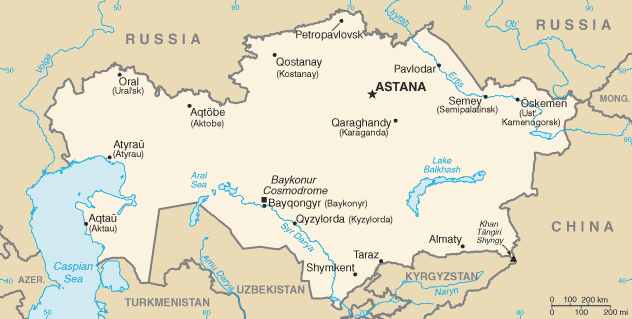
Kazakhstan currently permits American planes to fly over its territory, but last week officials in Astana denied reports that it would allow American planes to land at Kazakhstani facilities. Uzbekistan evicted American forces from their strategically important airbase at Karshi-Khanabad in 2005. Manas Airbase, at Bishkek’s international airport in Kyrgyzstan, remains America’s only base in the region.