
Showing posts with label Ukraine. Show all posts
Showing posts with label Ukraine. Show all posts
Monday, August 3, 2009
Russian Military Chorus Belittles Europe's Energy Dependence
Moscow's Military District is known for much more than ensuring public order. Their ensemble of Slavic singers apparently can carry quite a tune for audiences. One recent song showcases the insinuations of Russia's foreign policy. Their musings of the challenges to come are both captivating and alarming for the contiguous countries and those affected by Russia's energy monopoly.
The song begins with the question of Ukraine's eventual entry into NATO. Russia's response? Cutting the gas for all of Ukraine. While the audience cackled, they most likely were recalling Gazprom, the Russian energy monopoly cut off supplies of natural gas to Ukraine after a payment deadline expired in January. Relations have been icy ever since Ukraine's Orange Revolution in 2004 launched the pro-Western career of President Viktor Yushchenko. Since then, Putin's relationship with its neighbor has deteriorated and continues to do so.
The next stanza details the recurrent everyday problems of Europe. It says that American Special Forces are already there, implying it is Europe's prerogative to have them there. Russia's military is not distressed, however, as its prescriptive policy calls for the gas to be cut for Europe too.
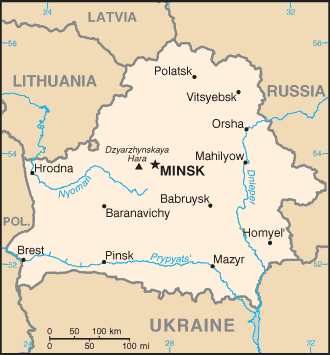
The singers state that the Belorussians are the only normal, peaceful people. They make this claim because the neighboring country drink's vodka to their health. Russia and Belarus continue to maintain an amiable relationship in the post-Soviet sphere. As a memorial to their infatuation of all things Soviet, Belarus has even kept its name for their secret service: the KGB. Belarus continues to rely on Russia for virtually all of its natural resources, enduring the politically compatible relations between Putin and Lukashenko.
The piece continues in Russia's desire to lead the long list of European countries; a fact demonstrated by it's frustration of having been denied the number one spot. Russia's Napoleon complex made itself evident in the innate necessity to be considered significant after the culmination of the Soviet Union. This explains the reasoning behind others allowing it to become member to the G-8, partner with NATO, and maintaining its chair on the UN Security Council. With an out-of-touch military that desperately needs to modernize and its economic difficulties, Russia will always seek ways of seeming important, if only outwardly.
The chorus of the song repeats the following line: "...and suddenly a shade of smile will touch your eyes, and the good mood will never leave you." Indeed, this verse seems to acknowledge that Russians will always be cognizant of and appreciate their energy power over Europe. This mocking will no doubt continue to surface in both Russian concert halls and inside Kremlin walls.


Friday, February 13, 2009
Why Nurture Russia's Illusions?

One of the best articles I've read on the current analysis of US-Russian relations and Russia's status quo: their intentions, objectives, and prospects. Perfect for anyone with a rudimentary knowledge of Eurasian affairs.
By MATTHEW KAMINSKI - WSJ
Barack Obama wants to make friends with Russia, "press the reset button" as his Veep proposed the other day.
Sounds familiar. Bill Clinton bear hugged Boris Yeltsin and George W. Bush peered into successor Vladimir Putin's soul. Yet relations haven't been this bad since Konstantin Chernenko's days at the Kremlin.
So what? America is on a roll in Eurasia. Democracy, open markets and stability spread across the region in the Clinton and Bush eras. From Estonia to Georgia to Macedonia, free people want to join the West.
At every step of the way, Russia sought to undermine this great post-Cold War project. Grant that the Kremlin acts in defense of its perceived interests but so should the U.S., and continue down this same path.
Here Foggy Bottom's finest chime in: Yes, but imagine a world with a friendly Russia, able to help us, say, stop Iran's atomic bomb program. So let's not push so hard to deploy anti-Iran missile defense sites in Poland and the Czech Republic that Russia hates -- use, if necessary, the excuse that costs and feasibility require further study. Back off on closer NATO ties for Ukraine and Georgia. Make Russia feel important and consulted. Joe Biden sketched out this sort of bargain at last weekend's Munich security conference.
The conceit is we can win the Kremlin over by modifying our behavior. Before Mr. Obama tries, he should be aware of recent history. On missile defense, American diplomats spent as much time negotiating with Russia as with the Central Europeans, offering Moscow the chance to join in. Nothing came of it. On Kosovo independence and Iran sanctions, Russia blocked the West at the U.N.
Last spring, NATO snubbed Georgia and Ukraine in a signal of good will to Mr. Putin. The day after, Mr. Putin privately told Mr. Bush that Ukraine wasn't "a real country" and belonged in the Russian fold. Five months later, Russia invaded Georgia and de facto annexed its breakaway provinces of Abkhazia and South Ossetia.
Mr. Obama may be tempted to think Russia can be won over. After all, they would seem to need America (short for the West) far more than America needs Russia. We're not the enemy. Russia's real strategic challenges are in the East: China looks ravenously at the vast, mineral-rich, lightly populated Siberian steppe cut off from Moscow (to this day, you can't drive across Russia). And to the South: The arc of Islamic extremism, starting with a possibly nuclear Iran, a competitor for Caspian energy and influence.
And as Mr. Putin discovers each day his economy sinks further, Russia failed to take advantage of sky-high oil prices to diversify away from energy. It sells nothing of value to the world aside from gas, oil and second-rate weapons. Its infrastructure is decaying and its population in decline.
A Kremlin leader with a long-term view would see these grave threats to Russia's future and rush to build a close partnership with the West. But the interests of Mr. Putin and his small, thuggish, authoritarian clique don't necessarily coincide with that of Russia.
The Obama magic dust doesn't seem to work on a regime defined and legitimized by its deep dislike for America. Dmitry Medvedev, the Putin underling in the president's office, moved the state of the nation address to the day after the American election to spin the outcome for the domestic audience. The U.S., he said into the winds of pro-American sentiment sweeping across the world in the wake of the Obama win, was "selfish . . . mistaken, egotistical and sometime simply dangerous."
The Kremlin then welcomed Mr. Obama into the White House with the administration's first serious foreign policy headache. Taking $2 billion from its fast-depleting reserves, Russia bullied and bribed Kyrgyzstan to close a U.S. military airfield, the main transport hub for supplies going into Afghanistan. Russia's desire for a "sphere of influence" trumps the threat of resurgent extreme Islamism in its southern underbelly.
The thinking here is Cold War porridge. But the Russians were never offered a new narrative. Mikhail Gorbachev's idea of a "European family" and Yeltsin's reforms foundered. Mr. Putin went back to a familiar recipe: Russia, empire-builder and scourge of the West.
A Cold War mentality lingers in America, too. A foreign policy caste rich in Sovietologists by habit overstates Russia's importance. The embassy in Moscow is huge; bilateral meetings inevitably become "summits," like in the old days.
Mr. Obama's fresh start is a good time for a reality check. The U.S. can work with Russia, seen in its proper place. To even suggest that the Russians have a special say over the fate of a Ukraine or our alliance with the Czechs lets Mr. Putin nurture the illusion of supposed greatness, and helps him hang on to power.
Ultimately it's up to the Russians to decide to be friends. One day, someone in the Kremlin will have to confront a hard choice: Does an isolated and dysfunctional Russia want to modernize and join up with the West, look toward China, or continue its slow decline? Until then, Mr. Obama better stock up on aspirin and dampen his and our expectations about Russia.
Sunday, February 1, 2009
No More Brotherhood Between Ukraine and Russia

Good for Ohryzko and the much-needed official statement on the state of historic and cultural relations between Ukraine and Russia from the Kyiv Post.
Ukrainian Foreign Minister Volodymyr Ohryzko thinks that the period of "brotherhood and the unity of Slavic people" has been gone for a long time in Russia-Ukraine relations.
"The time has come to get rid of stereotypes and stamps of brotherhood, historic unity and other things. We are the two sovereign states and we should build our relations on the basis of the international law," Ohryzko said at a news conference in Kyiv on Monday.
"When one speaks about the Slavic unity, an interesting question arises: how many Slavic countries are NATO members and how many are not," the minister said.
The Ukrainian Foreign Ministry can take "no red lines and no distribution of continents at the guidance of certain leaders" in the international security issue, the minister said.
"Each state has the right to choose its national security," Ohryzko said.
Tuesday, January 27, 2009
Ukrainian Security Service To Make Secret Soviet Documents Public

Finally, a post-Soviet country that has the sense to do what the Germans did following the dissolution of the Berlin Wall: publicize all classified documents to be readily available to the public. I wholeheartedly laud Ukraine's SBU (Служба безпеки України) for this decision, something that will undoubtedly add mountains of information to the history of the injustices of the Soviet Union. One can only hope that other post-Soviet countries will follow suit. The following article appeared today in RFE/RL.
KYIV -- Ukraine's Security Service (SBU) has said it will hold a lustration process this year with previously classified documents, RFE/RL's Ukrainian Service reports.
SBU spokesman Valentin Nalivaychenko has said that all secret files from the Soviet period in Ukraine between 1917 and 1991 will be made available to the public.
He said beginning on January 21, "Ukraine does not keep the secrets of the Soviet Union's repressive system."
Nalivaychenko added that there are currently more than 800,000 cases of files sealed as "secret" or "top secret."
The SBU said it will eventually set up a website that will contain all lustrated documents.
Subscribe to:
Comments (Atom)







 Posts
Posts

